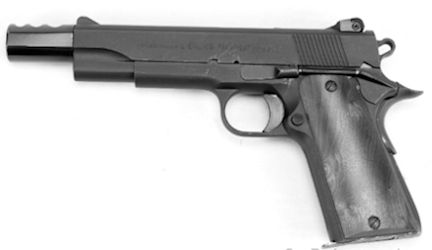
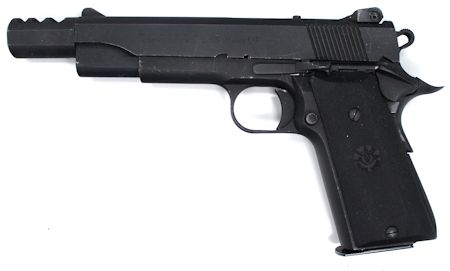
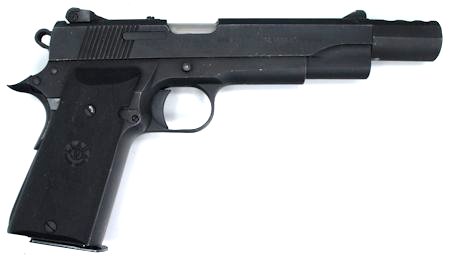
Spanish
Blue Steel

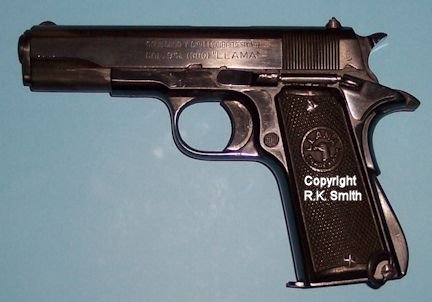
Llama
Llama means Flame in Spanish, but they
used the animal as their logo as well.
Llama
is pronounced Yama in
Spanish
RK
Smith
There
is an enormous amount of
incorrect
information out there about the model numbers on the guns Llama made
and
I have done my best in identifying them to correct it. This research
project has been both a rewarding and frustrating experience.
A large
number of
the guns were in my collection to assist in this endeavor and I think I
now
have it all as it should be. I want to inform you before you go any
further that the designations of series and variation are my
designations and not those of Llama. I do it to show that
there
were major changes made to the guns every few years and there were even
variations within those years.
In
2005 Llama closed its doors for the last time due to lack of sales and
a bankruptcy. This followed the demise of Astra and Star in
about
1997. They simply failed to compete with all of the other gun
manufacturers out there, I think due to the bad
reputation Spanish
guns acquired during the first World War and the restrictions
place on them by the Spanish government. Llama also is
reported to have made bad guns during the 80's, but to this day I have
never found one. During the 80's they went to making the XI-A
9mm
P a
blow back, I think to cut down on manufacturing costs and that did not
help either.
Because of the cheap prices Llama's might not have been finished as
well
as the Colt, but with a bit of work , polishing parts, they work great
and I have some early ones that are fantastic.
Gabilondo
y Uresti started producing
the Radium seven shot 6.35 in 1910. The patent of the "Radium" was
in
the name of Don Guillermo Echeverria and of Don Valentin
Vallejo.
The patent was a weird form of loading the gun by sliding the right
grip
and inserting the rounds into the butt directly. The one I
have seen
had Spanish proofs and that is not consistent with there not being a
proof
house in Ebiar at that time. It also had the encircled EU
with a
crown which I have never seen before. Production ceased in
1915.
Pic
isn't
very good but the best I can do at
the time
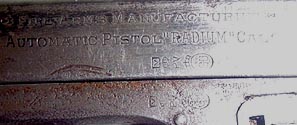
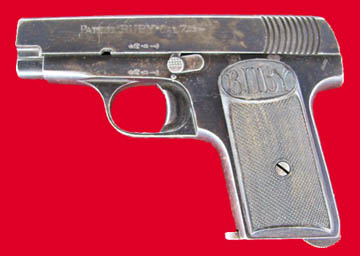
They also made a Radium that looked like the Ruby
They
started making a gun in 1914 based on
the Browning 1903 and the modifications of the design by earlier guns
like
the Astra Victoria 1911 and called it the Ruby. It was a well
made
gun with fair tolerances, so parts were interchangeable within its own
brand. It was the first to have a 9 round magazine because
Gabilondo
had built it to be used by the Military or Police. At the
beginning
of WWI Gabilondo presented the gun to France for trials and it was
accepted
in 1915 with orders for 10,000 a month. The guns were actually
purchased by Les Ouvriers Reunies and from there went to the French
gvernment. My understanding is
that
at this time Gabilondo had 5 employees. Four months later
orders
would be increased to 30,000 a month. This was far more than
Gabilando
could produce so he contracted with others to produce for him.
Four
smaller companies contracted with Gabilondo
to produce 5000 pistols a month each and along with the 10,000 he could
produce, he was able to fulfill the 30,000 needed. The
pistols these
4 companies, Armera Elgoibaressa y Cia, Echealasa y Vincinai y Cia,
, Hijos de Angel Echeverria y Cia, produced were not of
the Gabilondo quality but were accepted by the French
government.
All of the guns supplied were blue, 9 shot with checkered wood grips
and
accompanied by three magazines along with a holster supplied by the
French.
By the end of the war it is thought that Gabilondo alone produced from
250,000 to 300,000 pistols. Archivo Municipal de Eibar
records show
that Iraola Salaverria y Cia only produced 10,000 guns total and Hijos
de Angel Echeverria y Cia produced 154,000.
The 1914
Ruby in 7.65 - 9 shot with checkered
wood grips as made for the French in WWI.
There are two
variations of this gun, the other one having a different placement of
the
grips screws. Possibly more but the other one I have only seen in photos.
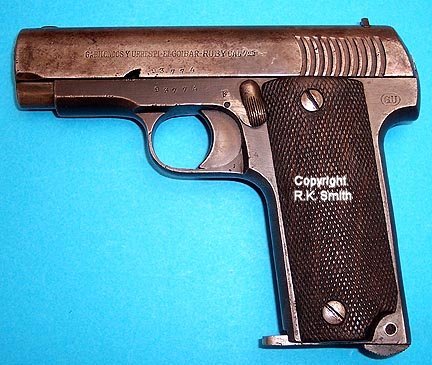
photo of internals
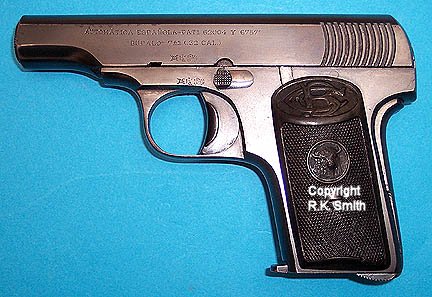
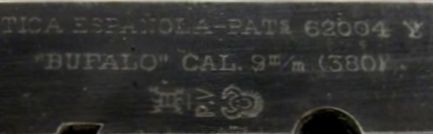
Beristain
y Cia of Eibar, between the years
of 1916 and 1920 received patents for improvements to the Browning
1910,
patent No. 62,004 and No. 67,567. Beristain contracted with
Gobilondo
to make the gun and production started in 1920. The Logo on the grips
is
BC not GB for Gregorio Bolumburu as some report it to
be. Browning
filed a law suit against Beristain for patent infringement but lost the
suit in 1925 . Spanish law more or less says if you do not make it in
Spain
the patent is no good, so Browning lost. Beristain cancelled
the
contract even though he won. This gun was made in 6.35mm,
7.65mm
and .380 acp.
7.65
Bufalo
6.35
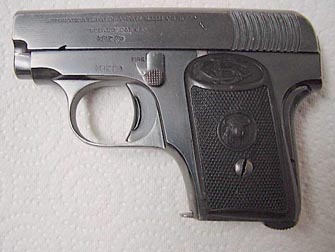
Gabilondo
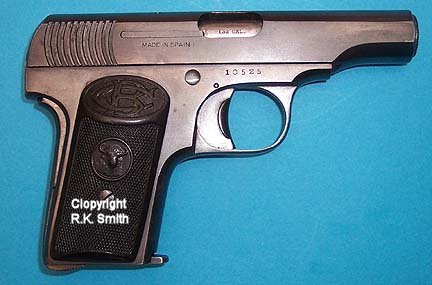
also made the Bufalo design
in a gun he labeled as Manufactured by "Ruby" Arms
Co. I think
this was a product of 1927 as it has an A which is rather fancy with a
crown above it by the pv proof. On the right side is the
serial number
and there is an oval with AG in it on the trigger guard. The
ovals
with letters in them stood for the manufacturer at one time but they
were
on the left side tang. The right side of the slide also has
"made
in Spain" on it so they were made for export to the US or other
European
countries. There is normally no grip safety on it as the grip
safety
was a patent of Beristain but this one has it..
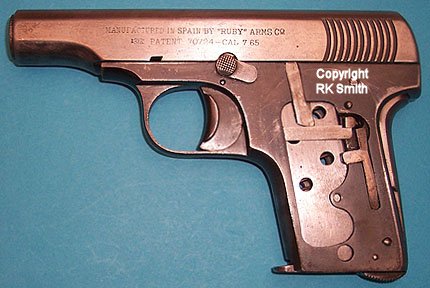
This gun does not have
the grip safety and has a serial number
lower than any Bufalo I have ever seen making me wonder if it was
actually
a forerunner to the Bufalo instead of being made
afterward.
At the time serial numbers were not controlled by the Spanish
government
so it could have been either way. This gun has no proof marks
whatsoever.
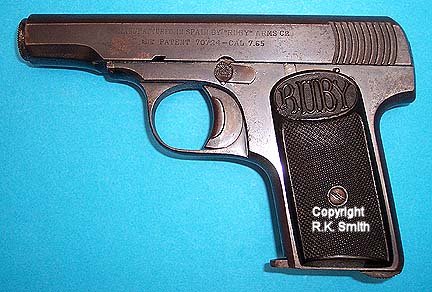
This is
a Ruby 7 shot 7.65 mm made in 1928
with a B date code. Very similar to the Astra Victoria from
earlier
years
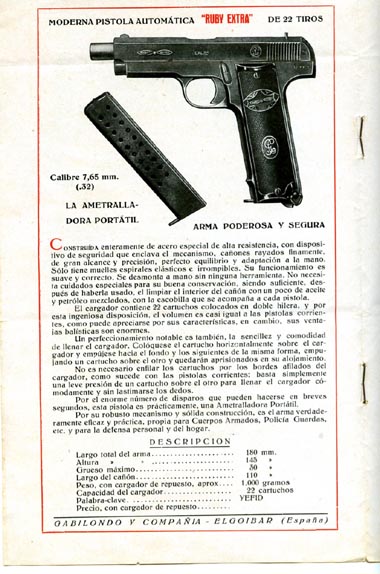
Ruby
Ultra Plus 22 shot. These
guns were used by Japanese pilots, Army and Navy and purchased through
their "union". The union was called Kaikosha for
the Army and
Suikosha for the Navy. I think this was like a PX for our
military
as it was on base. They came in semi and full auto. Reported
to have
been a favorite of the Abraham Lincoln Brigade of the Republican Army.
Production ended about 1931
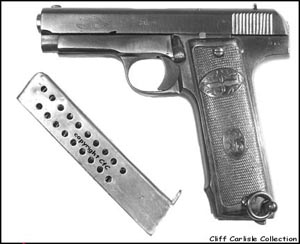
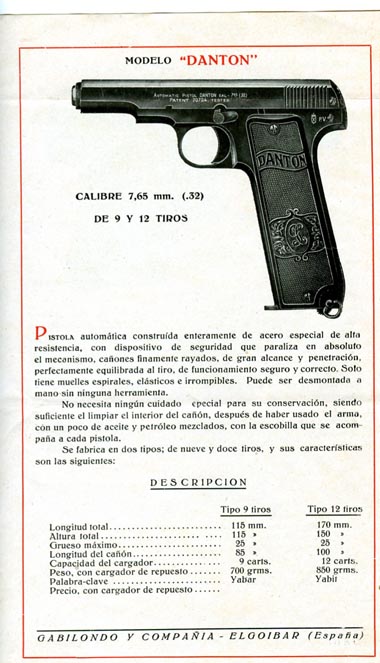
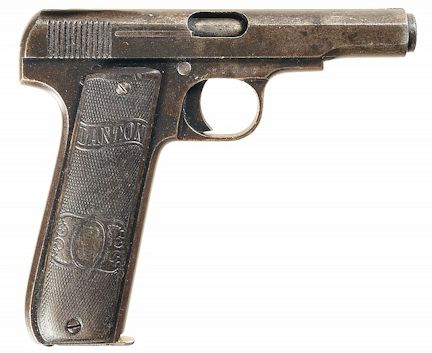
Danton
- 7.65mm - 9 shot. Produced
from 1925 until 1931. The gun came with and without a grip
safety.
In a later model it was also in .380acp.
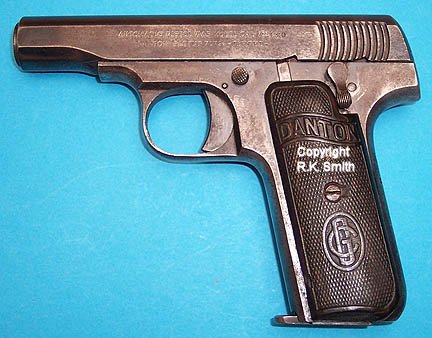
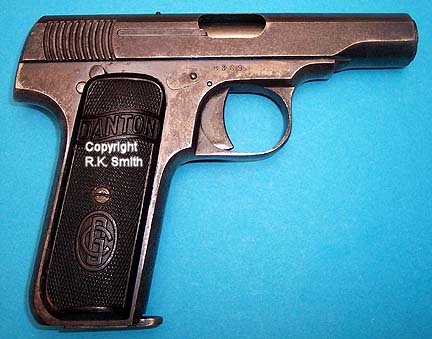
While this gun is nothing more than an Ultra
Plus it is marked Danton
War Model
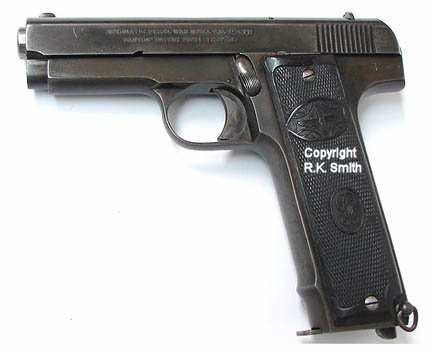
Danton War Model
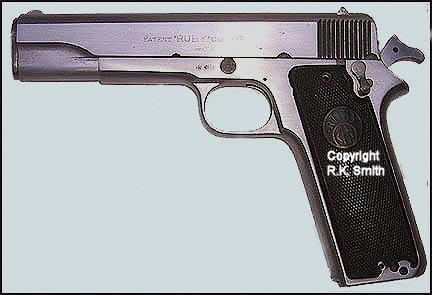
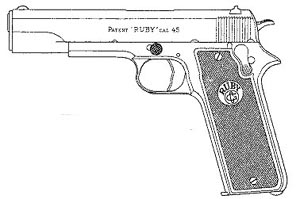
Very rare .45
Ruby. Late 1920 production
and was the basis for the later Llama.
Not really noticeable is the
fact
that the grip is extra long to hold a mag capacity of 9. Also
made in 9mm. I
have
read
that this gun was also marked Llama but I have never seen proof of
that.
To my knowledge the model IV was the first to have Llama on it.
My gun is only partially reassembled for photo and will be
restored.
In
1933 to 1935 Gabilondo made
two other groups of pistols called the Tauler and the Mugica that were
exported to the rest of the world.
Eibar gun dealer Jose Mugica
contracted with Gabilondo for guns using his own trade name Mugica as
did Tauler who was from Madrid.
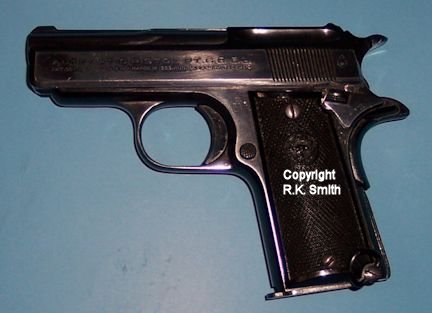
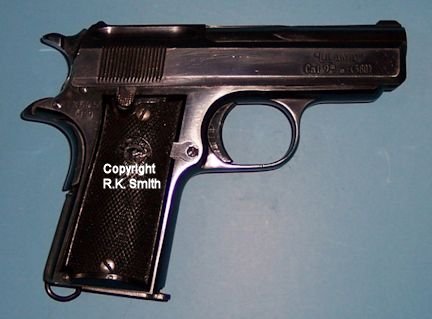
Llama Police
Model- Manufacture 1933 date code F, blow back operated, cal
7.65 or .380, 7 round mag, barrel 3 ". This is a little known
model used by the Spanish Police in .380 if it had a model
number it is unknown by anyone. It was also made
under the name Tauler from 1933 to 1936. There is a hand
drawn
picture of the Tauler version in Gene Gangarosa's book on Spanish
Handguns on page 180. It resembles the Star model H.
This
particular gun was not marked Model Police on the right side of the
slide. I have seen the Llama and Cal. in three different
positions on the slide and the Model Police is usually toward the
front. Serial number has been in two different places also.
They were not imported into the US and only bring backs are
here.
No Made in Spain stamped on them. It has no lock
back on
the slide at all.
I also
have a pic of this gun with Tauler on it

During
the Spanish Civil war all of the gun makers were within the Republican
(Basque) held territory, even Astra who was actually on the side of
the Nationalist or on the side with the Catholic Church actually.
As a
result of this only Astra continued to make guns after that territory
was taken over by the Nationalists. After the war confiscated
arms were separated as to good or bad and the bad guns were destroyed.
At some point after this some guns in need of work were sent
to
Astra to be refinished, later bought and sold by Interarms which was a
CIA cover company. Astra, Star and Llama were the only companies
allowed to
make guns after the war was over and Astra was rewarded by being
allowed to refinish them.
During WWII a company
named Geco, Gustav
Genschow
& Co, imported guns from Spain to be sold to Nazi party members
and
marked their guns with the Geco logo which is a large G with the eco
inside it. Unless one of the Llamas has this mark or you have the bring
back papers you cannot tell for sure if it was used in Germany during
the war or not. Another
company did import them but they are not marked in any way.
Officers were to furnish their own guns so many Llamas were
sold,
although I have only seen one large caliber gun with the Geco mark.
Most likely there are many out there but this type of gun was
never put in German records or marked with Nazi marks. Llama
records appear to be non existent on any of the guns they sold or they
are being held in seclusion. No one seems to know anything.
I
will add here that Spain never bought guns from Llama for
any government agency unless it was the Trauler model VI for
the
Secret
Service, that I can find any record of. They
were used in trials
but never passed the requirements and only Star and Astra were
purchased.
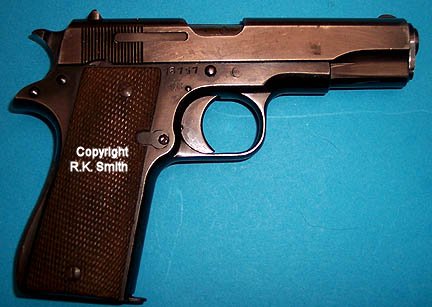
Llama
Model I - 7.65mm. Production
started in 1933 and lasted thru 1954. This model was the
first production
of the small frame Llamas and was also produced in the name Tauler and
Mugica. Blow back operated, 161 mm overall length ,
94mm barrel,
9 round magazine. This gun has no grip safety and has a W
shaped
spring under the left grip to provide a detent spring for the safety
and
slide release.
Grips go all the way up to the slide.
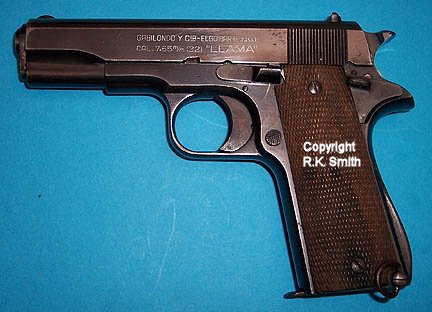
This gun is Geco marked above the
trigger. Sometimes the mark
is on the left side below the slide release.
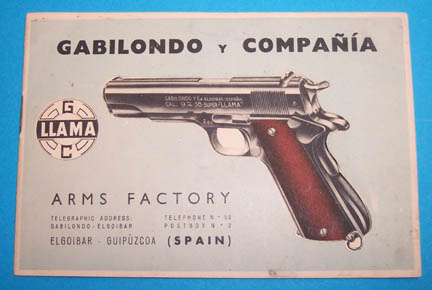
Booklet that came with this gun
Llama
Model II - .380mm Production started
in 1933 and lasted thru 1954.
Locked Breech as
you can see in the photo below,
161mm overall length, 94mm
barrel and 8 round magazine. This gun had a change in the way the
safety
was made to the same look as the later model I above had.
There
have been reports that this gun ceased production in 35 because of
faults, but it did not. You may also find this gun
Marked Super Police on the right side of the slide.
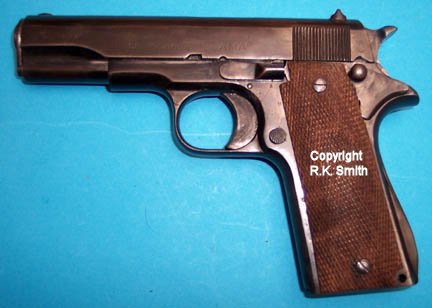
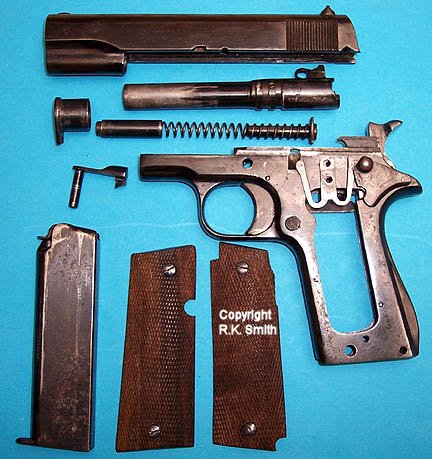
This is another variation of this gun made a
few years later with a different shaped beavertail and it is marked
with a logo on both the right and left sides of the slide.
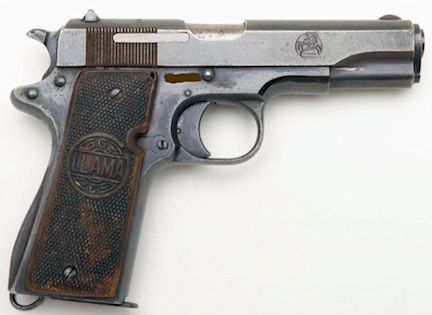
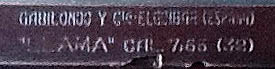
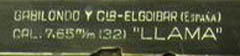
Made in 1948
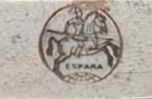
Logo
This is
the early Llama legend and then
changed to the ones below.

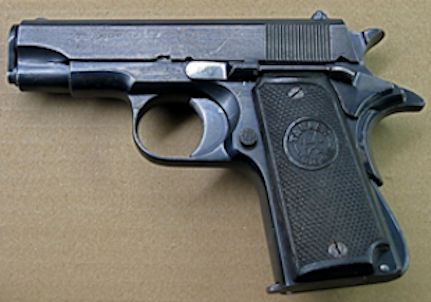
Llama III .380
acp - Locked Breech, 166mm
overall length. Production lasted through 1954. This model
introduced
the plunger coil detent spring instead of the W spring. This
gun
is shown with the wrong type magazine. It should have the
same mag
as a model II which fits up in the frame The model I, II, and
III
all have an angled grip on the butt which changed in 1954 to the
rounded
butt on the model IIIA. This gun has the detent spring in the round
tube above the left grip and the grip does not go all the way
to the
slide as with the model I and II. The gun pictured is an
"Especial" but it was also marked "Super Police". Brochure I
have
from Llama refers to the smaller guns as Officers models.
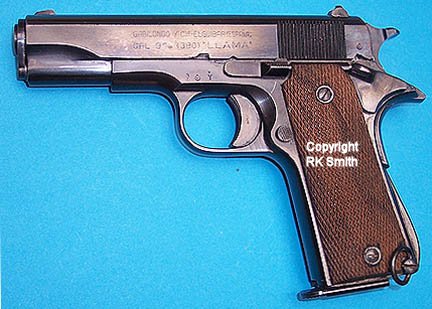
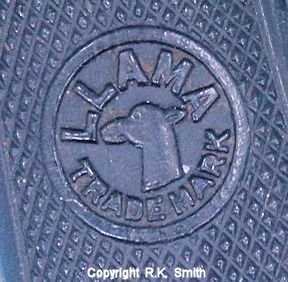
This logo is said to
have been used on the Mexican made Llamas but they were III-A's.
Also used by Spain in the early
years. The flaming torch is also used in the same type grip.
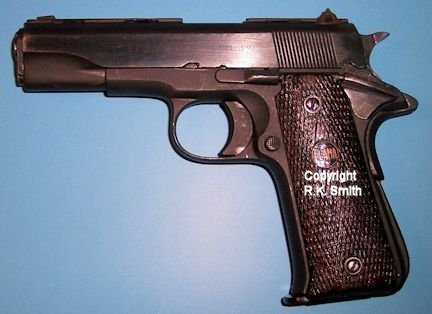
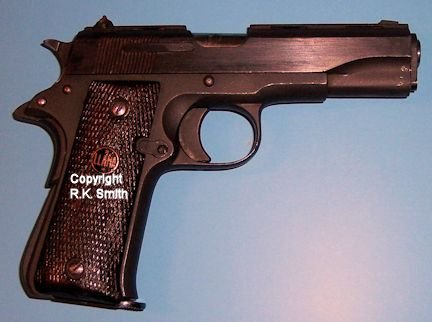
Llama IIIA series 1 variation 1- 380
acp, Locked
breech,161 mm overall
length,
three vents in the rib, 1955 into 1969. Grips of this type
were
used
on the Especial only and were made of Bakelite not the later plastic. I
have seen them in black and a hereford red with black
streaks.
This model also came with wood checkered grips or the normal cheap
plastic
grips. At this time I have never understood the meaning of"
Especial"
in regards to these guns other than a name. The guns not marked
"Especial"
are exactly the same, so what was the purpose? It was a ploy used to
sell guns. During the Ruby years they made guns using
different
names on the same gun for that purpose. Hoping to entice someone to buy
it because of the different name.
Llama IIIA Series 1 variation 2 came with a solid rib on the slide
otherwise it was the same as variation 1.
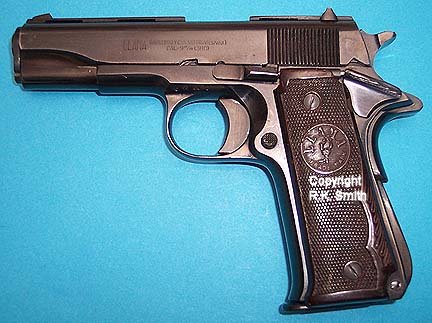
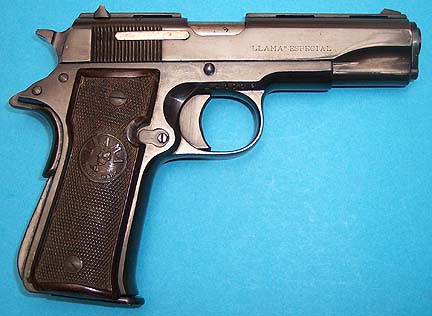
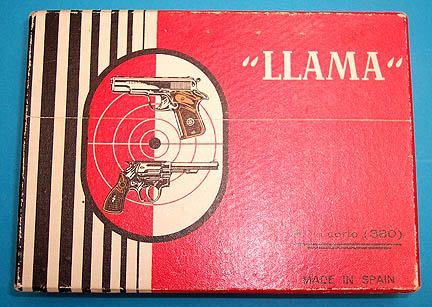
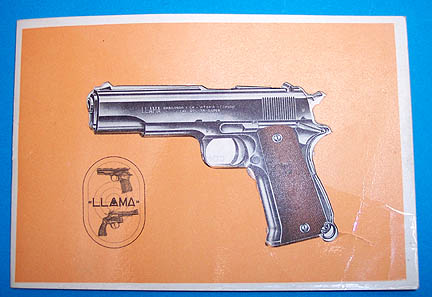
Box and booklet that goes with this gun
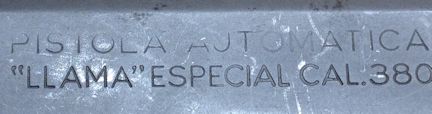
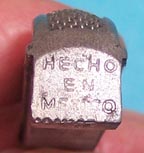
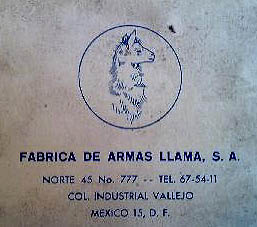
This model was also made in Mexico at
“FABRICA DE ARMAS LLAMA”
– COLONIA INDUSTRIAL VALLEJO – MEXICO 15, D.F.” where they marked it
PISTOLA
AUTOMATICA “LLAMA” ESPECIAL CAL
380 along with
HECHO EN MEXICO on the bottom of the hammer spring arch. This factory
was
a subsidiary of Gabilondo y Cia and manufactured the IIIA and XV until
1970. Llama translated to English means Flame which you will
notice
as a logo in the grips above but in Mexico they used the animal as the
logo. My gun
had the flaming torch in the Bakelite grips but I have also seen wood
checkered
grips on one of the guns. There were also engraved guns with
pearl
grips. In 1970 Mexico made it illegal to own more than one
gun and rifles and shot guns were mostly chosen. The
ones
that were confiscated were sold by the Mexican government to Odin
Internastional in
W. Virginia. Most Llamas I have seen were in really bad shape
and
were refinished in the black oxide you see below.
Pic is
from their catalog
Llama IIIA- Series 2 variation 1 .380
acp, locked breech, 165mm overall length with two vents in the rib. The
rear sight became adjustable with a screw for windage.
They had the straight serrations of the earlier series.
I do not have this gun at the time to show pics.
Llama
IIIA - series 2, variation 2
.380 acp, locked breech, 165mm overall length with two vents in the
rib.
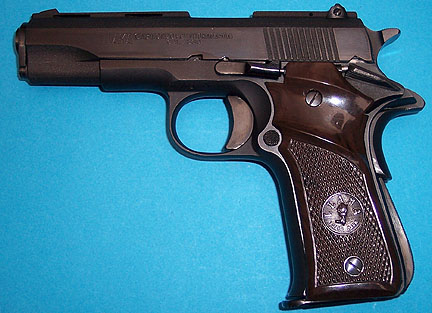
Made from 70 to about 80. This gun is marked Especial but can be had
not
marked at all on the right side of the slide. This particular
gun
has three finishes on it. The top of the slide has been
sandblasted
(rough)the sides of the slide and frame are polished and the remainder
of the frame has been bead blasted(satin). Other guns of this
series
were polished all over. Hard to tell in the photo but the
grips are
brown on this series. The serrations on the slide were changed on this
variation of the series.
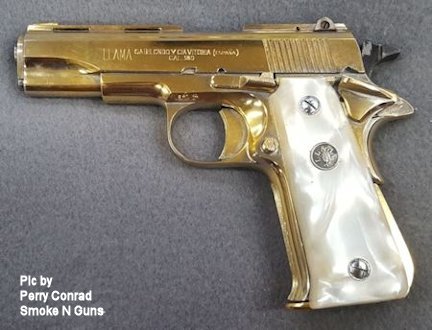
Gold Plated model GIII-A
Llama IIIA series 2, variation 3 .380
acp, locked breech, 165mm overall length with solid rib. Made
from
70 to about 78.
Llama IIIA series 3, .380acp, Looks like the gun
above but is blow
back operated, black grips and the logo is LLAMA Cal .380
Llama IIIA ,series 4, blow
back
operated, 162mm overall length
with two vents in the rib. Made from 80 to approx 1985.
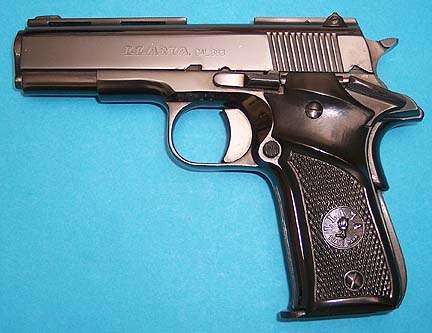
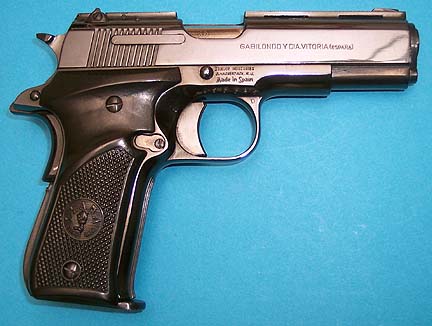
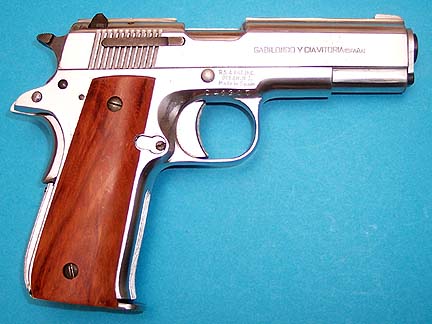
Llama
IIIA, series 5, blow back
operated, 162mm overall length with no vents in the rib.
These are
custom grips and they should be like the grips above except for the
longer
slide release which was introduced on the series below. They
are
the first guns to be marked with their model number.
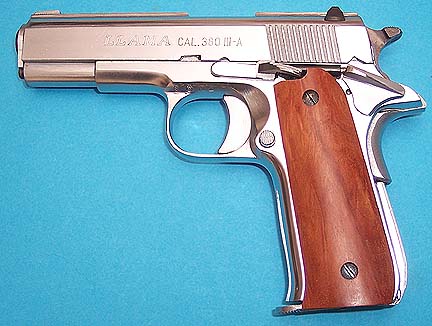
Larger photo
Micro
Max- This model was the
last of the small frame guns. Blow back operated.
Made from
1996 to 2005. The removal of the rib and the addition of the round
hammer,
beaver tail and front sight were the three changes made to the IIIA to
make
it a Micro. The gun below was made in 2004 as can be noted by
the
last two digits of what you think is the serial number. Only
the
five numbers in the middle are the serial.
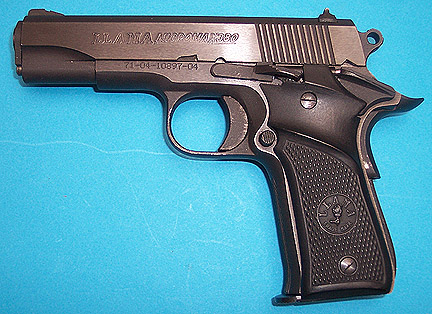
This Micro Max was made in 1997 and was
produced
using one of the slides from the previous series and not putting the
compound
curve at the front. I have seen another like it.
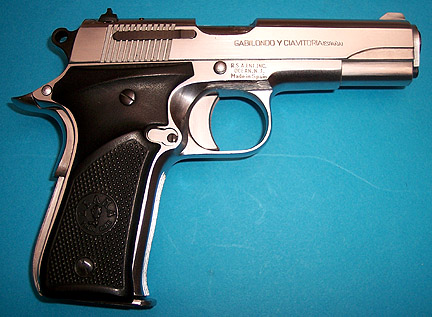
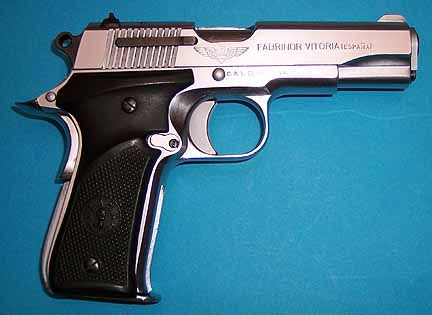
Ecuadorian
Air Force Contract Llama .380 Micro
Max. It was my understanding that these guns were made in
1997 only,
but this one was made in 2001 and is chrome plated. I am
thinking
that Llama had a slide or more that were over runs and they simply used
them on later guns, but have no way of knowing for sure. I have now
seen
a second one made in 2001.
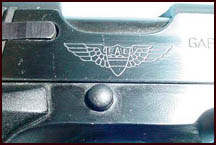
Ecuador
Air force wings
Llama
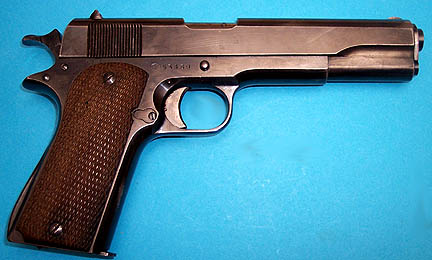
model IV - 9mm largo - 38 acp.
With N date code manufactured in 1942. Production of this gun
started
in 1932 and was an exact copy of the Colt 1911 except it has no grip
safety
and has a barrel 5 1/2" long, with a 228mm overall length. This was the
first of the Llama pistols made and for some reason was later given the
designation of model IV. These were not produced for the American
market
and are not readily found in the USA. I have only seen five
of
them
in the last 20 years.
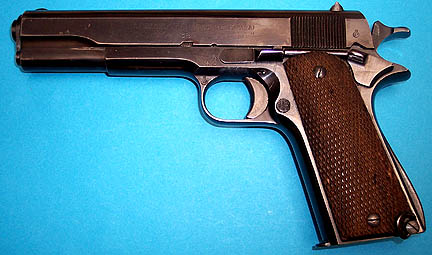
The gun looks the
same as a Model VII Llama Extra except for the lack of the
grip safety and the right grip has the extra little curve at the back
top
Larger
photo
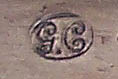
This mark will be found just before the serial
number on the older
guns
and is simply the GC for Gabilondo Y Cia. and is a continuation of the
practice of applying a manufacturers mark, first used on the Rubys
frame and magazines. If you look at the Ruby, at the
beginning,
you will see
the mark GU for Gabilondo y Uresti which was the name of the company at
the time. Some think it stands for Guardia Civil but that is
incorrect. Llama never produced weapons for the Guardia Civil
in
any number as they were not accepted in trials. If it was
actually Guardia Civil the proof of the flaming bomb would have an I in
it instead of a P. I is for military and the P is commercial
sale. The G and C would also be intertwined and have a crown
above
it without the oval.
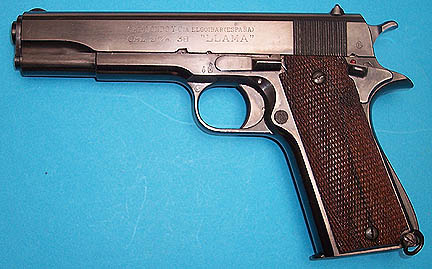
Llama Model V -
9mm Largo/38 Super, 9mm Parabellum 5 1/8
inch barrel, has no grip safety. This was manufactured for
export
to the USA market only. I have seen many of these on the auctions
mis-labeled
as almost ever model they made and for a time I had it labeled as a
model
IV but found out I was incorrect. Sorry if I have caused
confusion. This is one of three large caliber
models made with the W detent spring.
Internal extractor.
larger photo
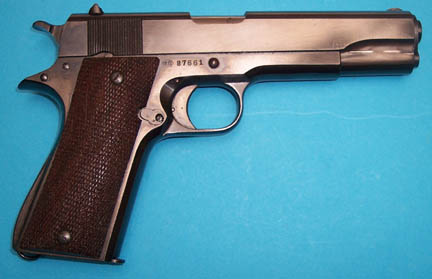
This gun is also a
model V made in 9mm P. This gun was made as special order for someone or some country in 1945
and is shown with different grips.
I have no idea how many were made but as of Feburary 2022 I have seen many of them.
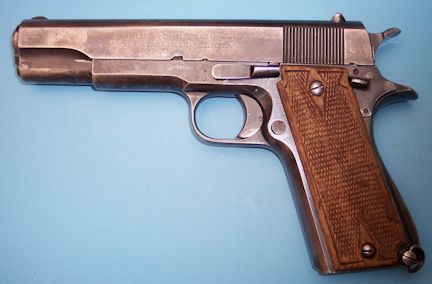
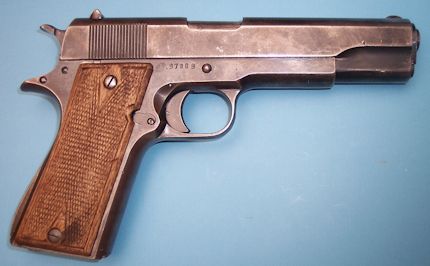
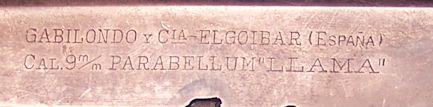
Unusual
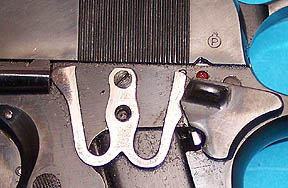
W detent spring on Model V which
is also on the model I, II and one variation of XI.
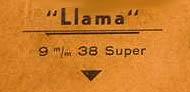
This is the label on the box for this
gun. I always figured
the 38 stood for acp rounds like it does on Stars, but this changed my
mind. This gun was made for the American market, so I am told, is
the reason it was marked for the 38 Super.
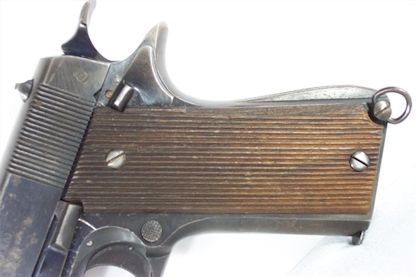
This type of
grip was used on the model V at one time.
Model
VI was made in .380 acp only
with a grip safety and I do not have a pic of it.
The gun had
the locked breech design of the Colt 1911, overall length of 150mm,
80mm
barrel and a 6 round magazine. They will usually be found
with the
marking Super Police on the right of the slide but are also not
marked.
Not sure any of these guns made it to the USA other than bring backs.
I
found this pic in my files and I have no idea where it came from.
If it has a copyright let me know and I will remove
it.
It is
a Tauler model VI and is exactly what the Llama model VI looks like.
Model
VII is chambered in 9mm Largo
and marked 9mm /38. Known as a Modelo Extra. The
Extra
refers
to the extra 1/2 inch length of the barrel as it did in the Ruby
Extra. I have records of this gun being made as
early as
1932
and as late as 1944. Barrel length is 5 1/2" This
gun has an internal extractor like the Colt.
and was also made in 9mm P.
During WWII England purchased these in 9mm P to be
dropped
by the SAS to partisans in Poland and other
countries.
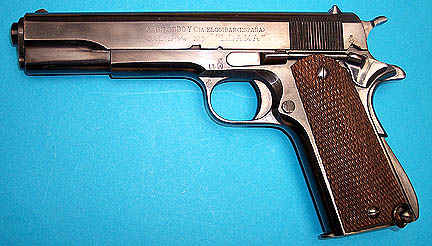 larger photo
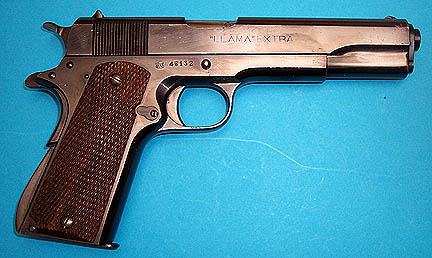
Llama Extra 9mm Parabellum
Grips on this gun are not correct. Gun was made aproximatley
1934 according to the serial humber
and I have not seen another but they exist as I have a book that lists them as made special.
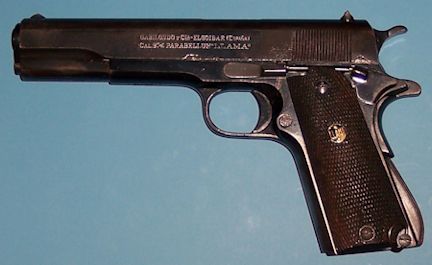
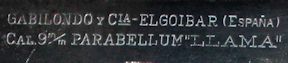
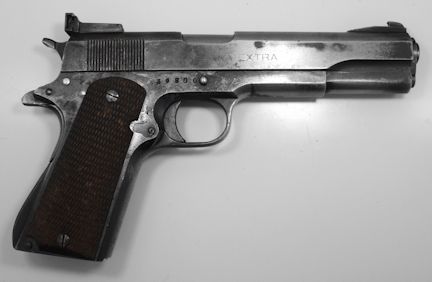
Llama Extra with factory target
sights. The serial number on this gun is 30800 so it was made during the Spanish Civil War. I
have never seen any information on this pistol and it was quite a
surprise. It has no dovetail for the rear sight and both
sights
are silver soldered on, so it almost has to be Llama made entirely.
It came to me directly from Spain via my importer.
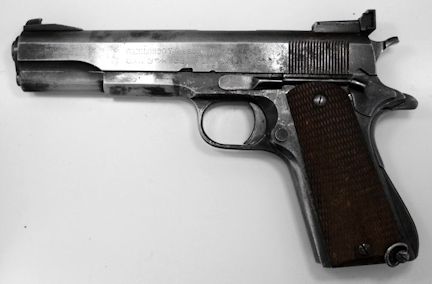
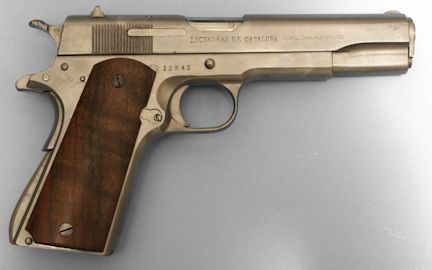
I
purchased a model VII not long ago that was really in bad shape and
having paid too much for it decided to just rebuild it. I found
out very quickly that it was not going to be easy to restore it because
some regular VII parts did not fit the gun correctly. They were
all confined to the recoil spring and it's two other parts. I almost
gave up looking for the parts, but happened to think about parts for
the Model XI. The two parts that fit the spring do fit this gun
but the spring isn't strong enough being for a 9mm P, so I used a 9mm
Largo spring from a Star and it worked fine. It is marked
Escuadras De Cataluna and was one of the first year guns
that Llama made. It is marked 9mm only, but is for the 9mm
Largo. Serial number is 12942. I dont intend to fire this
pistol because the frame had casting flaws and although it is a very
used gun I don't feel safe with it and have no reason to fire it
anyway. The difference in this gun and the regular VII is just
those three parts. Pic will be available after I finish it.
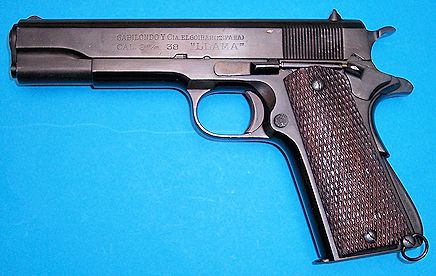
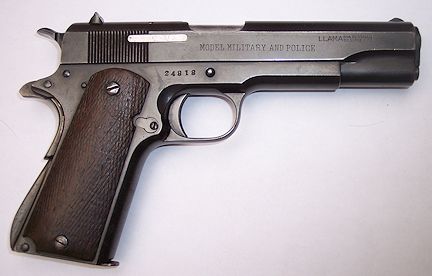
Llama model VII
Military and
Police - 5 1/16" barrel -9mm Largo and 38 acp. This gun
appears to be
one made the fifth year they made them, 1936,
according to the serial number. Proofs were not placed on
guns made during the Civil war These guns were sold to Interarms
in the 60's on
an
arms deal. This was prior to the 68 GCA so no import marks
were
required along with the fact that Interarms was a CIA operation.
This gun can be found with Especial on the right side of
the slide as well as one with no marking on the right or only 9mm
Automatic. Oddly enough I have seen one of these guns with
the long slide and M&P instead of Extra, made early in the civil
war. Serial number 25413
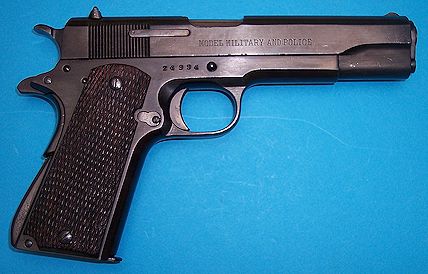
I
have been given pics of this version of the VII with Llama Extra
stamped on the right side of the slide. Obivously a mistake or maybe
made out of spare parts during the latter part of the war, about 1938-39 Serial
number
being 40120 with no proofs on the frame.
larger
photo
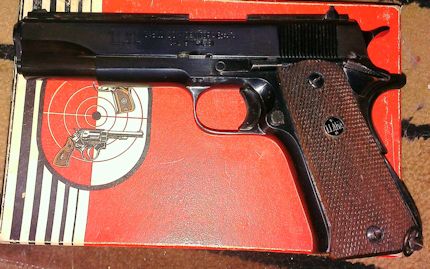
Model
VIII is chambered for the .38
Super. Early versions of this gun were marked as
Military
and Police on the right side with 9mm Bergman 38 Super on the
front of the slide. The gun looks identical to the model VII
in
every respect except the caliber markings. The gun shown
below
has the early slide markings on the left side and was made just before
my M&P model VII which has the later slide markings.
In
actuality there no difference in the model VII M&P and the
VIII
M&P except for the markings. As with my model VII this gun was made early in the war
this gun
was made in 1936
larger photo
Caliber is marked on
the front
of the slide where is says Llama and can be seen in the larger photo
Three vent rib 2nd series
This gun has the 38 super on the right side of the
slide above the trigger and 9mm/38 on the left side of the slide
Pics courtesy of Allen Jensen 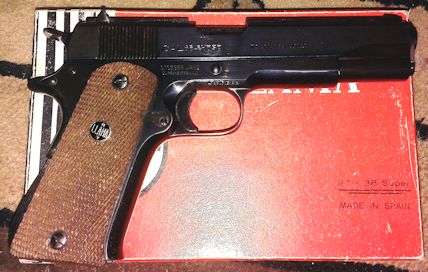
VIII C/F solid rib 5th
series
Tauler model P
9mm Have seen this gun listed as 38 Super
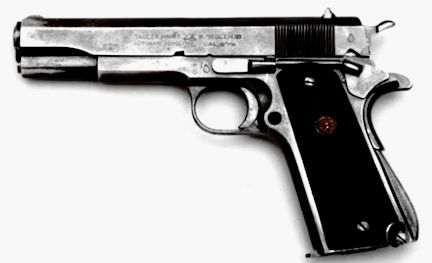

Llama IX
The IX was again
an exact look alike to the
model VII but had a barrel for the 45 cal round.
I have only
seen one actual IX .45 for sale anywhere and I do not own one to show a
pic.
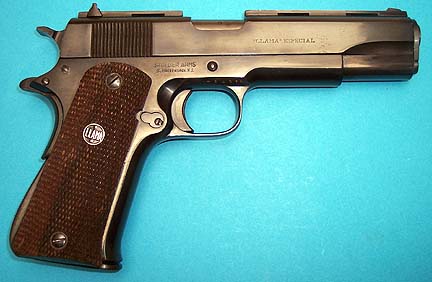
Llama
IXA was produced as a replacement for
the IX .45cal - large base mag. Three vent first
series
starting
in 1954 and being made thru 1969. This gun was also
made
with a raised area where the rib is that has lines to deflect glare. It is not the height of the raised
portion on the XA below. I would not exactly call it a rib because
it doesn't appear to be for that purpose.
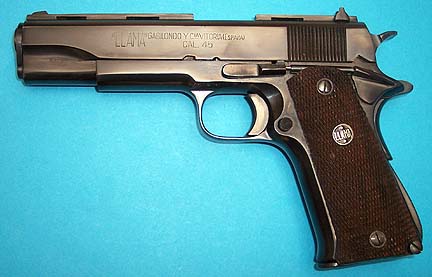
larger
photo
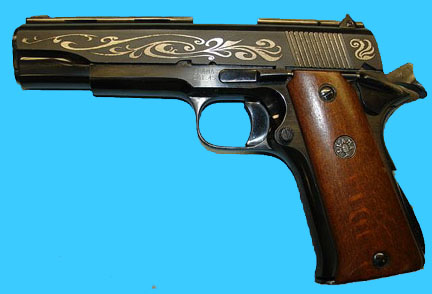
Model E-IX-A two vent rib second series
which started in 1969 mid year. The E is for engraved . I
think the
deep relief engraving was discontinued at this time because it does not
show up in my catalog.
Catalog
pages for the second series two vent
Slab
sided slide two vent rib third
series
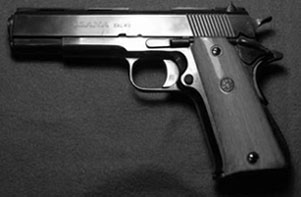
Small
base mag
Pic to follow
Llama
IX-B - .45 Cal.
This gun is a Colt Commander size gun with a 4 1/4"
barrel.
This gun is, satin Chrome and not stainless as most people think they
are.
Custom 4S Brand grips as normally they would have a funky plastic grip
that falls apart in the screw holes. The mags are
interchangeable
with Colt mags. The C is again for Chrome IX-B.
Model C-IX-B . This series was made from 1985 into 1995.
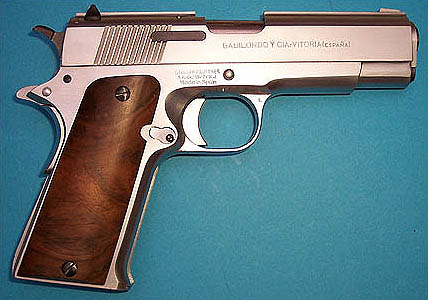
Llama IX
C - .45 Cal. This is a
full size gun with a double stack 10 round magazine magazine to comply
with California law. It could also be purchased with a 13
round
magazine
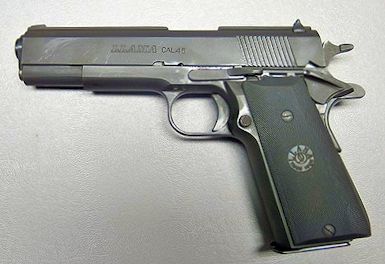
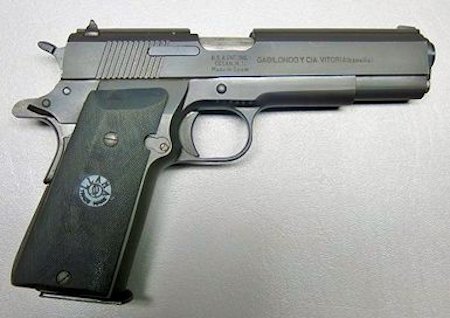
Llama IX
D - .45 Cal. This is a Commander
size with a double stack magazine.
Llama X - 7.65 blow back, 166mm overall
length, no rib on the slide,
grip safety, small base 8 shot magazine, Manufactured thru 1950.
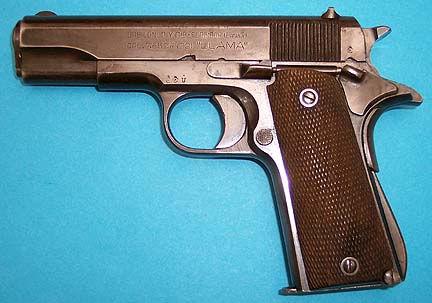
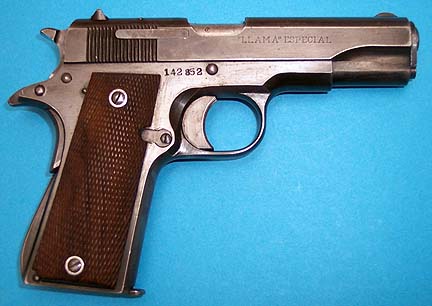
Shown
with grips that I think were never used on US imports
although I do have ithem on a bring back model III
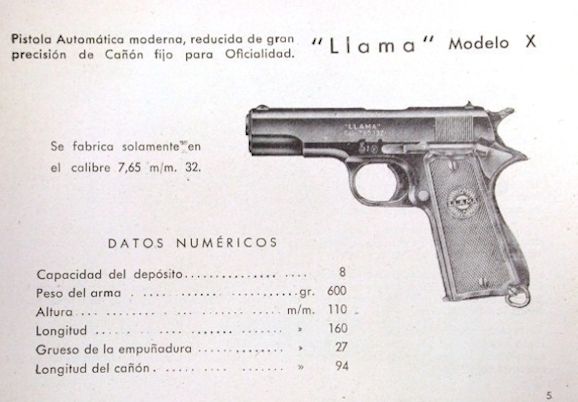
Llama XA 7.65 blow back,
manufactured in 1951 thru 54 in
this
configuration with the angled corner on the back of the frame and the
magazine up inside the frame. The gun shown is a 1952.
I
noticed one gun with Z code marking that used a frame with the rounded
butt and a slide that had straight lines cut in it on top from front to
back which differs from the normal. Also used the later style
magazine. I have now seen a 1954 with no rib, the rounded
butt
frame and large base magazine so it appears that in 1954 they started
making the changes.
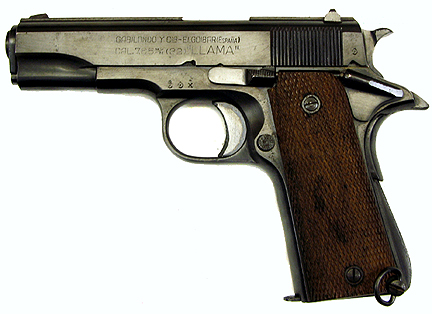
In 1954 the XA changed to have the rounded
back on the frame and
grips as well as a magazine that was large base. All of the
solid
rib, the two and three vent rib were used depending on the year model
up until 94 when they stopped making it. The external changes to the
frame and slide followed what they did to the III-A.
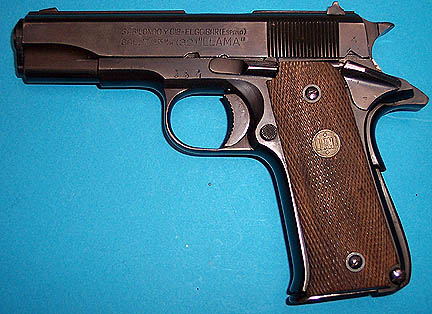
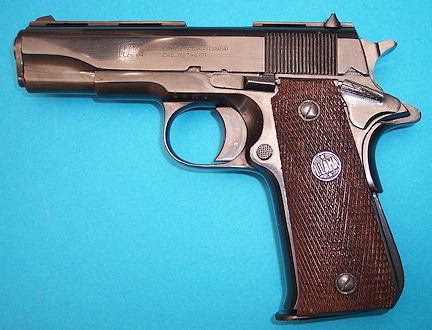
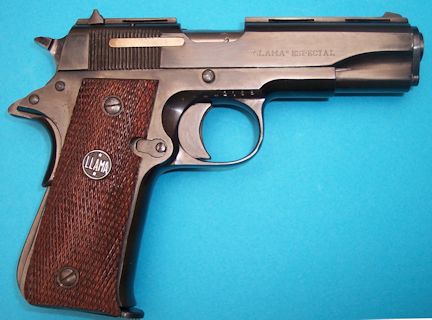
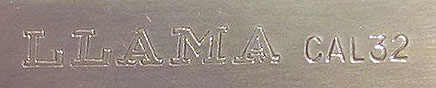
Legends on the 1980 and later XA models

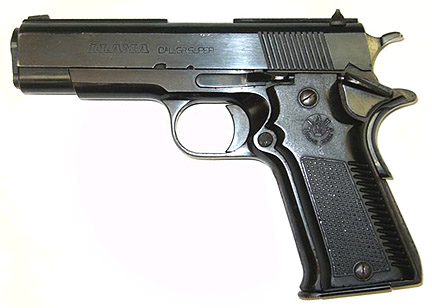
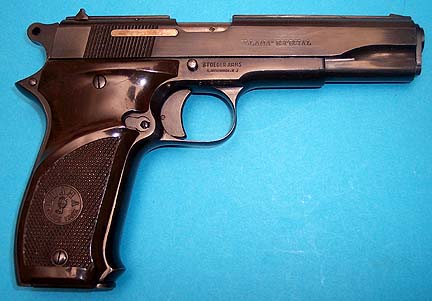
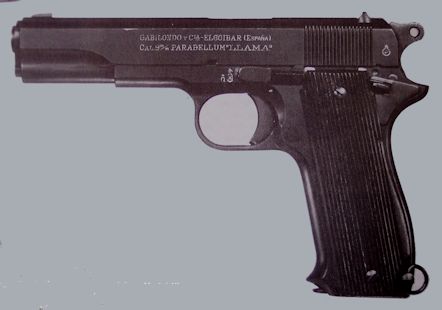
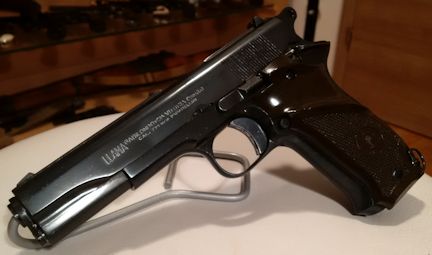
Llama model -XI 9mm P.
The
first design had the W
spring
detent and possibly came with only lined wood grips as that is
the
only way I have seen them. The second series had the detent
spring
tube with coil spring and used the same frame. Unlike the
other Llama large frame
guns this one is thinner at 3/4" in thickness and is actually
comparable to the Star A or B in size. The one directly below
is the third series which is wider in the grip area using a modified
frame and slide
but the same magazine. These guns were made from 1932 to at least 1974 as I have not seen a later one.
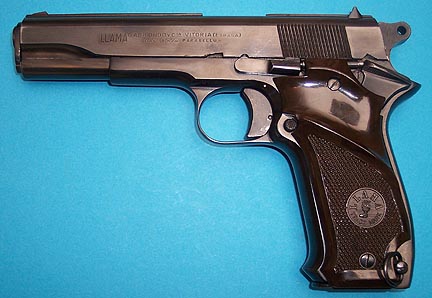
larger
photo
Early series 1932 date code *O - 1944
Second series A*1 date
code 1955
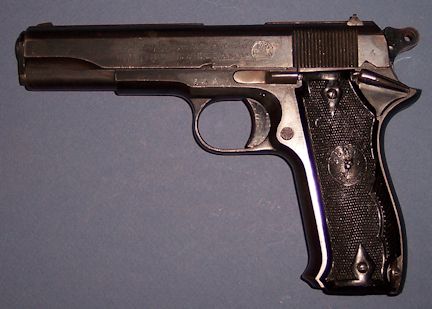
There
was also a version in 7.65 parabellum made for export to
Germany
and possibly other countries, but no indication it was ever offered in
the USA. It uses the standard third series frame and magazine
as the 7.65 P
round fits
perfectly.
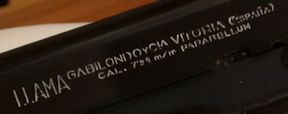
Courtesy of Bettina
Scharf - Austria
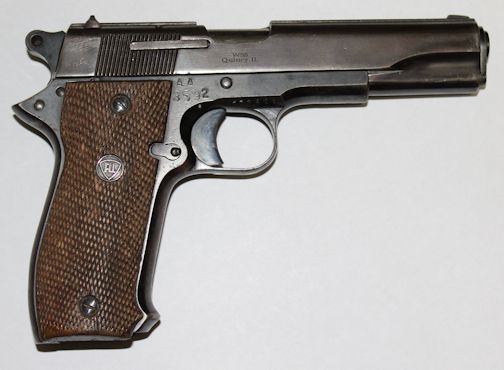
This
gun is the same as the one above but it was sold to Franchi and has
their grips on it. It wound up in Jordan, but I know it was purchased
along with other Llama guns that didnt have the Franchi name on them.
I bought a model V along with it which was captured by US
forces. Dont know that both guns were purchased in the same place
but both have the same type serial number marked on them by Jordan.
Why they were brought back to the US by US forces has me
puzzled but that is what the auction house said. This gun was
made in 1974. 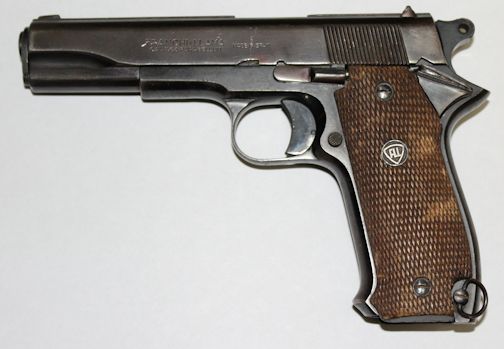
Llama XI
A - 9mm P - full size gun with 5"
barrel . This gun, manufactured in 1980, is blow back
operated.
I suppose in an effort to reduce costs they decided not to
use
the locked breech system found on earlier guns. At the same
time
they went to the blow back design for the IIIA also. This
series had problems and they were recalled for repair. Gabalondo
went out of business in 84 and a new company toook over to make the
1985 guns. They returned to the locked breech in 85. larger
photos
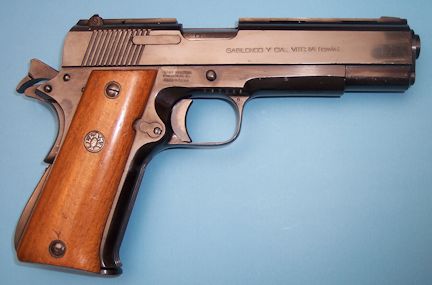
Llama XI
B - 9mm P _ Commander size with 4.340"
barrel Llama
XII-A The model XII started out as a revolver but by 1990 the
revolver line had been dropped and the XII-A and B became their
40S&W auto line. They were made from 90 until 95
Llama
XV- .22 cal built on the same frame as the IIIA
Llama
XVII- .22 cal called the Executive. Blow back
operated, 5
shot mag, 2 3/8" barrel, 4 3/4" overall length, 13 3/4oz.
Offered with
black or pearl grips in chrome or blue.
Llama
XVIII - .25 cal called the Executive. Blow back operated, 5
shot
mag, 2 3/8" barrel, 4 3/4" overall length, 13 3/4oz.
Offered
with black or pearl grips in chrome or blue according to the catalog
but this one has white grips.
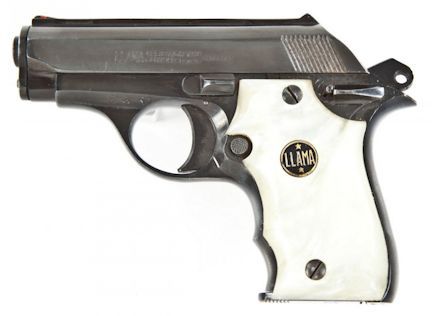
In
1992 Gabilondo y cia went bankrupt
and was purchase by the workers forming
Fabrinor. During the period of 1992 to 2005 they
struggled with a lack of sales causing them to have to
take the
company public in 2002 to keep the doors open. Finally closing their
doors in
2005 because the stock holders did not want to put in more money.
During
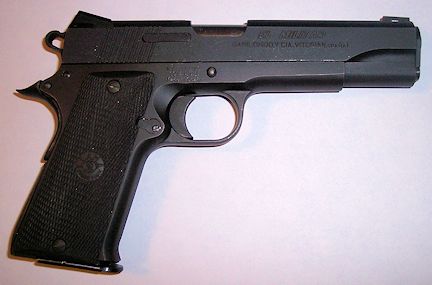
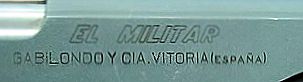
this period they made a Max I LF with the old 1980's frame and a slide
of the Max type and called it the El
Militar. Its odd but I suspect they used an in
stock frame
and
slide that were sitting on shelves in an effort to save a few dollars.
The frame is numbered in the normal manner for a gun made in 98 and you
can see where the old serial number and proof marks were
removed.
The frame was fitted with all of the Max I components. This is in 38
Super and is only the second I have seen. The front and rear
sight
are custom Novak and not original to the gun. They also made
it
with El Soldado stamped on the slide, meaning the Soldier.
Could
be more of them and more names as well
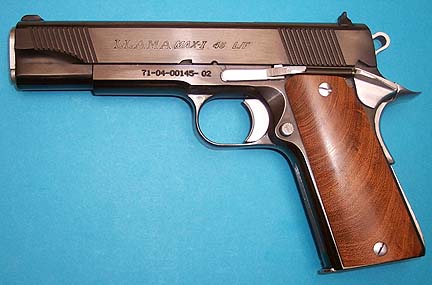
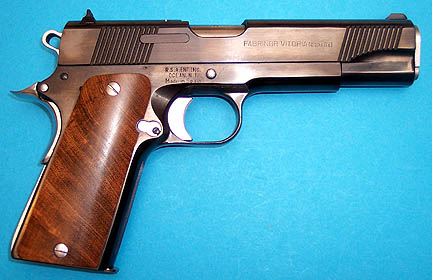
Max I
L/F - Deluxe .45 cal. with a 5.25
inch barrel - Custom 4S grips. Normally they have soft
checkered
rubber grips that do not last. The LF which stands for long frame came
in a variety of finishes, but never Stainless Steel as may be claimed.
Those guns are a brushed satin chrome. They came with and without the serrations at the front of the
slide. Colt 45 mags work and this one was equipped with a MecGar
Max I Comp
7-.45 cal With 4S walnut grips. Rear sight is adjustable for
windage and elevation. Looks to be the same sight used on the
Omni 45. 7 round magazine, fully adjustable rear
sight and Comp barrel
Max I
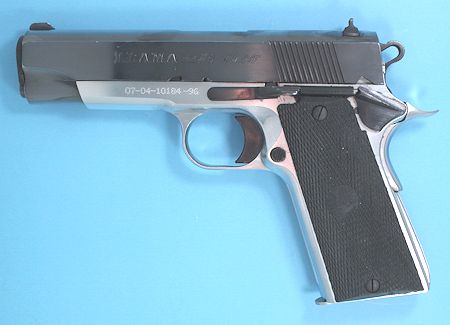
C/F - .45 cal compact
frame 4 .340" barrel, parkerized, blue or tutone satin chrome
frame
and blue slide
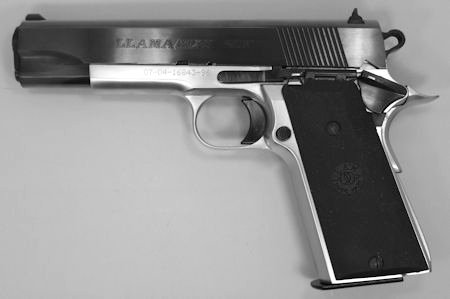
Max II
L/F large frame large capacity,
parkerized, blue or tutone satin chrome frame and blue slide. 10 or 13 round magazine.
MaxII
C/F compact frame large capacity,
parkerized ,blue or tutone satin chrome frame and blue slide
Max
II L/F Comp 10 - .45 cal
and
fully adjustable rear sights. Wide frame / double stack
magazine
13 Rounds. Wonderful trigger straight from the factory
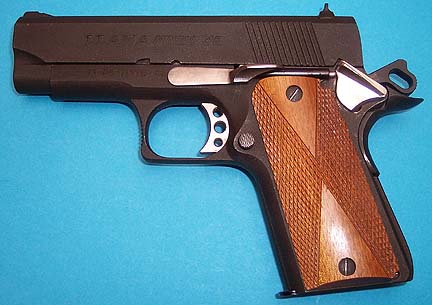
Mini Max
- 9mm, .40 cal, .45 cal. Colt Officers
size with a 7 shot capacity.
3.50"
barrel. Introduced in 1996.
Custom 4S Grips and trigger with full smoothing of the internal parts.
It
is a wonderful gun that is totally reliable and very accurate.

Mini Max II
- Large capacity double
stack magazine 10 rounds
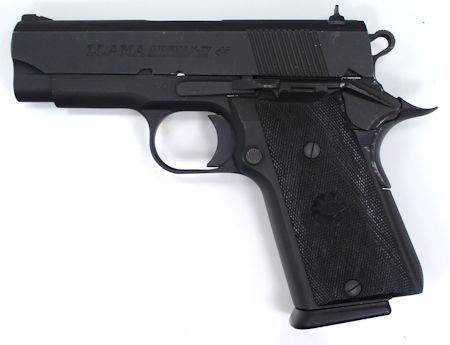
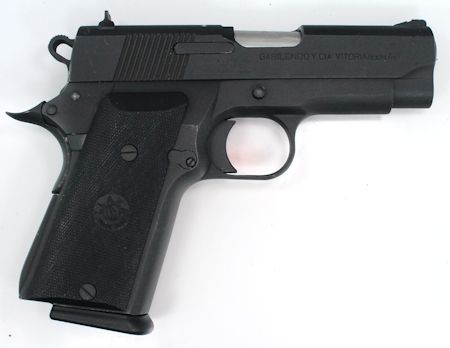
Mini Max
sub compact - .45 caliber 10
shot double stack magazine
Omni I
.45
cal - Omni II single stack mag 9mm 7 round - Omni III double stack mag
9mm 13 round mag. This was the most original and
sophisticated
Llama ever
designed, incorporating such unique features as ball bearings for the
hammer
pivot, separate draw bars for the single and double action sears, a
deeply
undercut trigger guard to allow high hand positioning for recoil
control, and "buttressed" rifling, which used a 2-stage
"step-down" from
the lands to the grooves, for less bullet deformation and a better gas
seal Most of these features have never been found all
together in
any other single design, and provide this pistol with an extremely
smooth
and reliable action. The Omni was not a success, primarily because the
sophistication of the piece led to production costs, and a retail
price,
that far exceeded many of its more conventional rivals. The
list
price of the Omni 9mm in the 1983 Gun Digest was $599.99, at a time
when
the S&W Model 59 listed for only $371.50.
45 Cal.
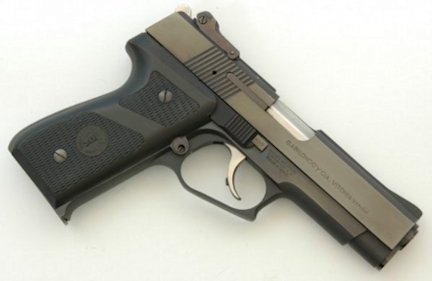
Omni
III-9mm
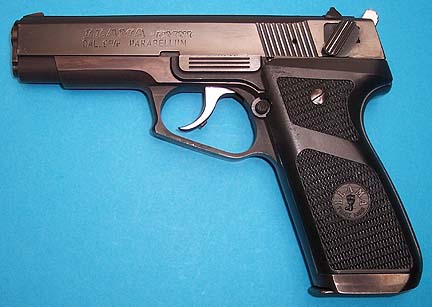
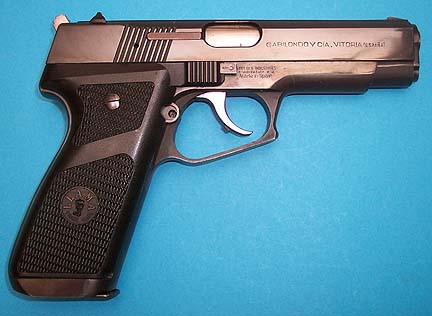
Model
82. This pistol was developed by
Llama in 1986 and was adopted by the Spanish military in
1988. It
is a recoil operated, locked breech semi automatic pistol. It
uses
a short recoiling barrel with tilting block, barrel-to-slide locking,
much
like the Walther P38 or Beretta 92. The Llama M82 is hammer
fired,
double action pistol. Safety is mounted on the slide and when
activated,
it moves the firing pin out of the reach of the hammer and locks it,
then
decocks the hammer and also disconnects the trigger bar. The safety
does
not affect the slide, so it can be cycled and the cartridge chambered
with
the safety on, but the hammer will not stay in the cocked
position.
After that, when the safety is disengaged , the gun will be ready to
fire
the first shot in Double Action. All further shots will be
fired
in single action mode. If so desired, you can also
manually
cock the hammer for the first shot, to improve accuracy. The frame and
slide of the M82 are made from steel, so the gun is relatively heavy,
but
strong. The trigger guard is shaped for a better two-hand hold, and the
sights are fixed. The double stack magazine holds 15 rounds plus one in
the chamber.
Manufactured by Beretta for Llama.
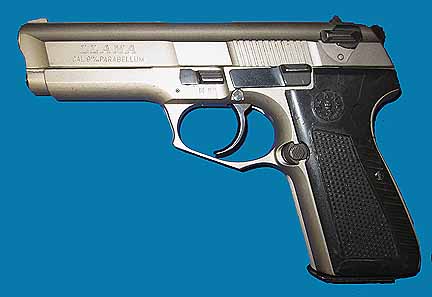
Llama
model 87 Competition 9mm, 40 SW and 7.65 P. This
gun is much the same as the model 82 but, so I am told, was built under
contract by
Beretta
for Llama. It is not a Beretta 92 but a Llama design.
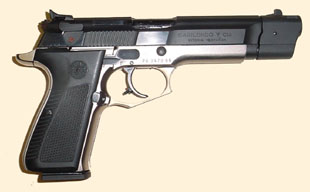
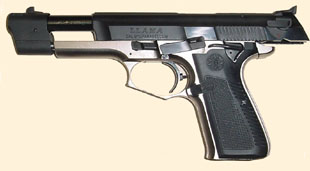
Llama Olympic 22lr I
am not sure they were ever brought into the USA. This one was for
sale in Spain and I am trying to get it imported for my collection.
Picture is from Spanish contact. 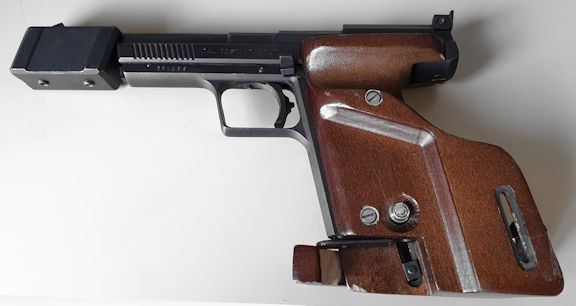

This is a Proof House marking which may look a
bit different on later guns.

This is the firing proof for a Pistol and on a
revolver it will be an R. On some guns this may be an I which
is for military. On some guns this proof may appear on the
left rear of the slide, on the left of the frame or on the barrel in
the
ejection port. This proof looks like a flaming bomb because
it is the firing proof of the gun.
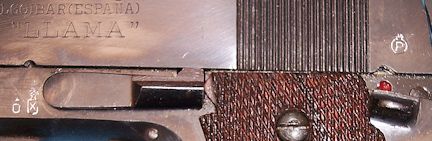
The date proof will be a letter or possibly a
letter and a number with an * above it. In this case the O,
1944 on a model V
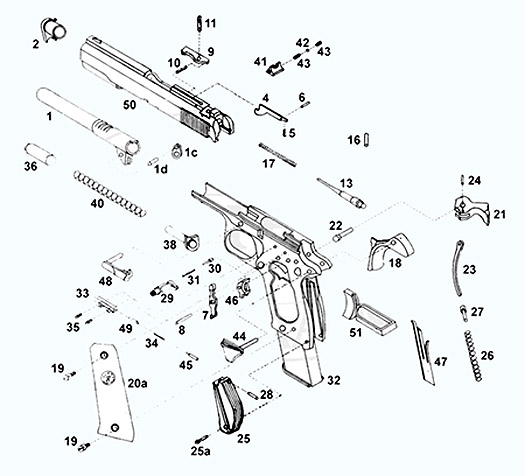
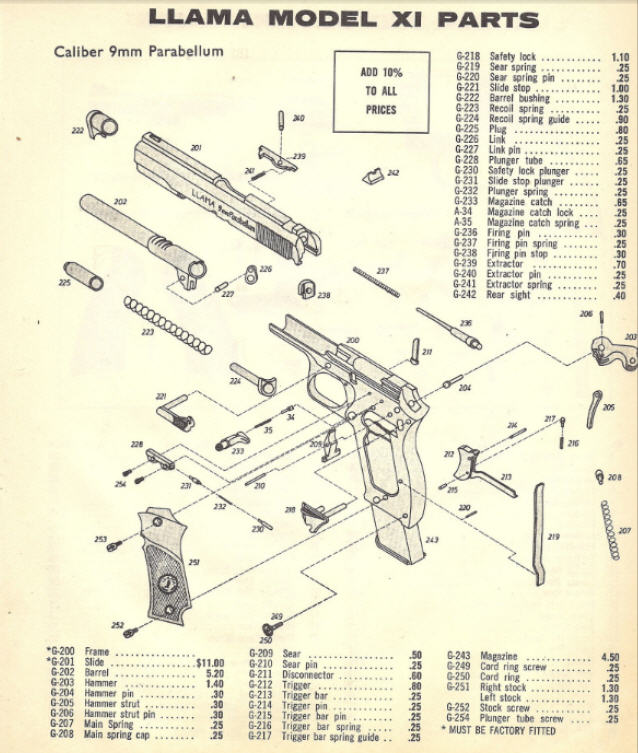
Exploded view of the IIIA, VIII, .IXA, XIA
Omni
Date Codes on
Llama Pistols
| Code |
Year |
Code |
Year |
Code |
Year |
| A |
1927 |
A1 |
1955 |
A2 |
1981 |
| B |
1928 |
B1 |
1956 |
B2 |
1982 |
| C |
1929 |
C1 |
1957 |
C2 |
1983 |
| CH |
1930 |
D1 |
1958 |
D2 |
1984 |
| D |
1931 |
E1 |
1959 |
E2 |
1985 |
| E |
1932 |
F1 |
1960 |
F2 |
1986 |
| F |
1933 |
G1 |
1961 |
G2 |
1987 |
| G |
1934 |
H1 |
1962 |
H2 |
1988 |
| H |
1935 |
I1 |
1963 |
I2 |
1989 |
| I |
1936 |
J1 |
1964 |
J2 |
1990 |
| J |
1937 |
K1 |
1965 |
K2 |
1991 |
| K |
1938 |
L1 |
1966 |
L2 |
1992 |
| L |
1939 |
M1 |
1967 |
M2 |
1992 |
| LL |
1940 |
N1 |
1968 |
N2 |
1994 |
| M |
1941 |
NN1 |
1969 |
NN2 |
1995 |
| N |
1942 |
O1 |
1970 |
O2 |
1996 |
| NN |
1943 |
P1 |
1971 |
P2 |
1997 |
| O |
1944 |
Q1 |
1972 |
Q2 |
1998 |
| P |
1945 |
R1 |
1973 |
R2 |
1999 |
| Q |
1946 |
S1 |
1974 |
S2 |
2000 |
| R |
1947 |
T1 |
1975 |
T2 |
2001 |
| S |
1948 |
U1 |
1976 |
U2 |
2002 |
| T |
1949 |
V1 |
1977 |
V2 |
2003 |
| U |
1950 |
X1 |
1978 |
X2 |
2004 |
| V |
1951 |
Y1 |
1979 |
Y2 |
2005 |
| X |
1952 |
Z1 |
1980 |
Z2 |
2006 |
| Y |
1953 |
- |
- |
- |
- |
| Z |
1954 |
- |
- |
- |
- |
Mugica Models vs
Llama Models
| Mugica Model 101 |
Llama Model X |
| Mugica Model 101-G |
Llama Model X-A |
| Mugica Model 105 |
Llama Model III |
| Mugica Model 105-G |
Llama Model III-A |
| Mugica Model 110 |
Llama Model VII |
| Mugica Model 110-G |
Llama Model VIII
|
| Mugica Model 120 |
Llama Model XI |
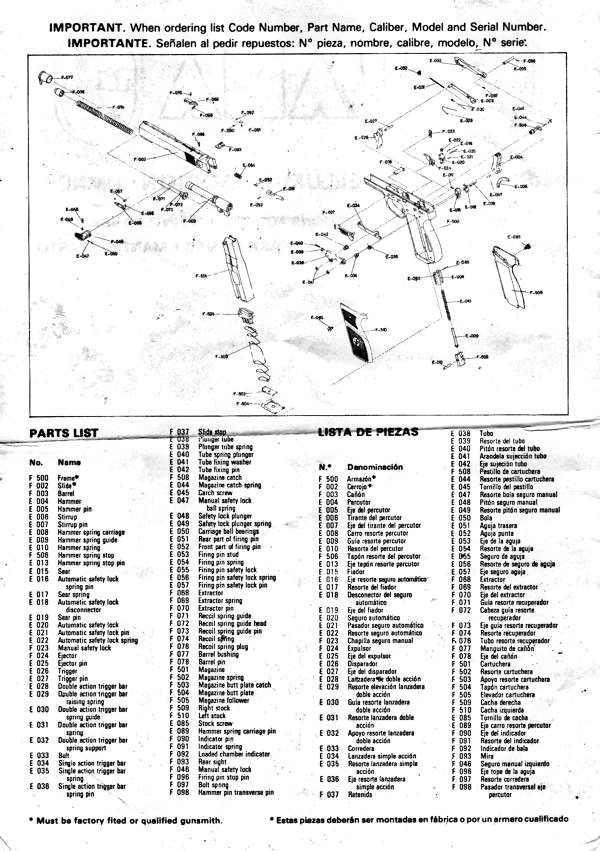
I have other diagrams of some of the
guns I cannot use on
the site because of copyright infringement. These are
detailed drawings
produced years ago. E-mail me if you would like to see them.
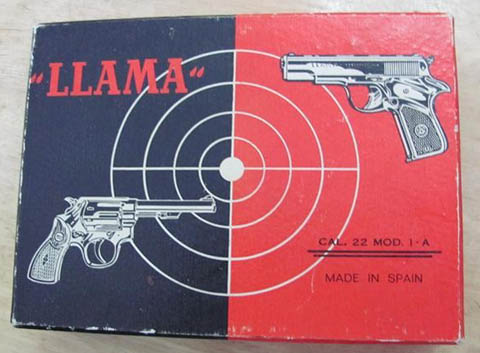
I have found a gun labeled as a Model I-A
on
the box, but I can assure
you there is no such model and the box is a mis-print. Why this ever
got
out of the factory is a mystery to everyone.
Llama
Catalog Pages
Data
base of serial numbers
Page 1
Page 2
If you would like to
contribute your model number, serial number and date code to this data
base let me know.
I
am almost always in the market for these guns so if you have something
you want to get rid of let me know. Looking mostly for the
model
IV, VII, VI and the Ruby 45 even as a parts gun but will
consider anything. I am especially interested in the model IX
.45
cal and VII 9mm P. All are early guns produced before 1955.
I am also interested in guns marked Tauler or Mugica.
Not
being especially interested in revolvers I have decided to add another
page to cover the Llama revolvers, but like the semi autos I dont trust
anything that is out there about them so I will have to collect them
also to make sure I have the correct information.
Llama Revolver
copyright© www.carbinesforcollectors.com
|